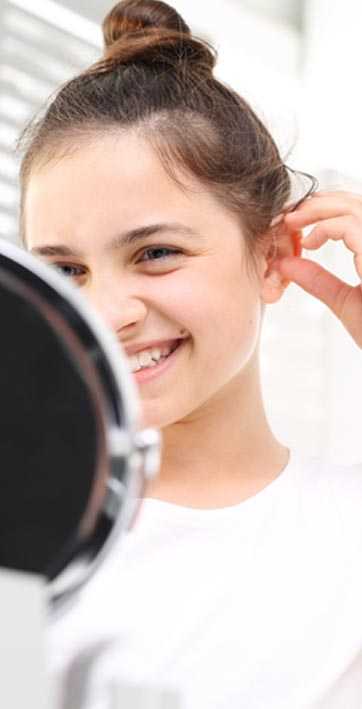
Who should consider prominent ear surgery?
Prominent ear correction is appropriate when the child or family is bothered by the appearance of the ears and especially if the child is teased at school because of it.
Prominent ears are seen in approximately 5% of children. What may appear cute in early childhood can later become a source of hurtful comments and may affect school and social life. For this reason, prominent ear correction is often recommended before school age.
Prominent ear deformity has a genetic component and is more common when one of the parents has the same feature. It is seen equally in girls and boys, but boys may be more affected socially because girls can often conceal the ears with their hair.
In newborns with prominent ears, the ear cartilage is soft, and some deformities may be improved with molding and taping. However, these methods are useful only before the cartilage becomes more rigid.
Surgery can create a more natural ear contour and improve self-confidence. The aim is not to change the person’s identity, but to reduce the prominence of the ears and create a more balanced appearance.
Are the results permanent?
The results of prominent ear surgery are generally permanent. Once the ear cartilage is reshaped and secured, the new contour is expected to remain stable.
What happens after surgery?
- A protective dressing is usually applied after surgery.
- Mild swelling, redness or tenderness may occur in the early period.
- A sports headband may be recommended for a period of time, especially during sleep.
- Children can usually return to school within a few days, depending on comfort.
- The ears should be protected from trauma during healing.
- Follow-up visits are important for monitoring recovery.
- The ear shape becomes more natural as swelling subsides.