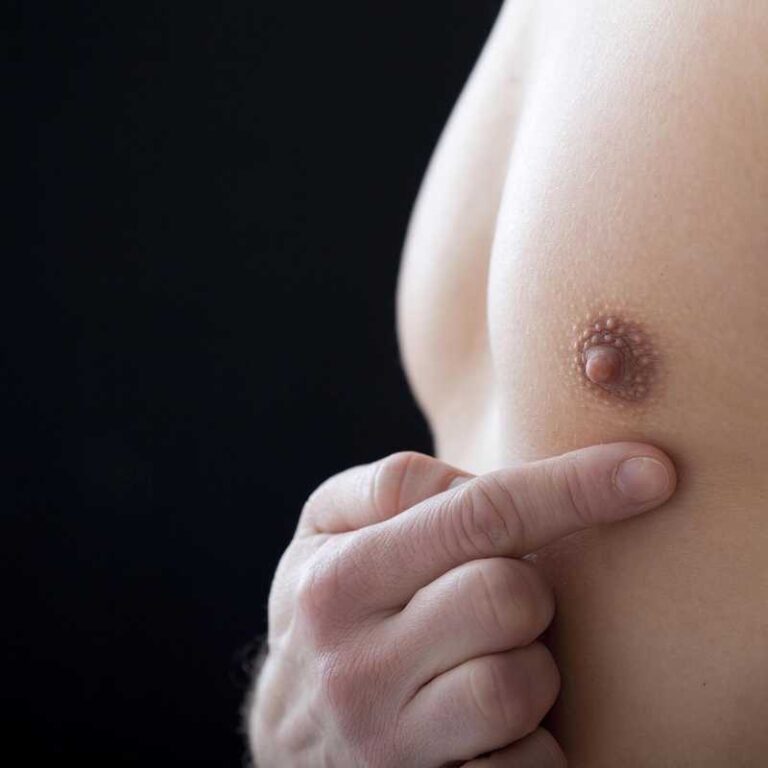
Who Is a Suitable Candidate for Gynecomastia Surgery?
Men who experience breast enlargement resembling a female breast contour, or enlargement of the chest associated with weight gain, may undergo this operation.
The development of female-type breast enlargement in men is called gynecomastia. In our society, gynecomastia is observed in nearly half of men.
This condition, which may cause significant psychological discomfort for men in social settings such as the sea, pool, beach or gym, can now be treated.
Gynecomastia may occur due to hormonal irregularities, alcohol use, long-term use of medications with breast enlargement as a side effect, steroid therapy, certain chronic internal organ diseases and tumors such as cirrhosis and liver cancer, nutritional disorders, or some infections such as AIDS. It may also be observed without any identifiable cause.
This condition, which may be seen in 75% of boys entering puberty, disappears in approximately 90% of cases by the end of adolescence.
Breast enlargement in men related to weight gain is not true gynecomastia. However, whether true gynecomastia or pseudogynecomastia is present, treatment options can be evaluated under three main headings. Three types of surgical approaches are used in the treatment of male breast enlargement.
- Fat removal with liposuction
- Surgical removal of breast tissue
- Combined liposuction and surgical excision
Liposuction is a good and relatively simple option for cases of gynecomastia that are not very advanced. In more severe cases, it may be necessary to remove skin and breast tissue through incisions placed in a semicircular pattern around the nipple.
What is pseudogynecomastia?
Pseudogynecomastia is a very common problem. It refers to the appearance of breast enlargement caused by fat accumulation associated with obesity, without actual enlargement of the breast gland.
What happens after gynecomastia surgery?
- The average duration of the operation is approximately 1 hour, and the patient can usually return home the same day or the following morning.
- A compression garment is required for 3-6 weeks.
- Excessive arm movements are limited during this period.
- Many daily activities can be performed comfortably 1-2 days after the operation.