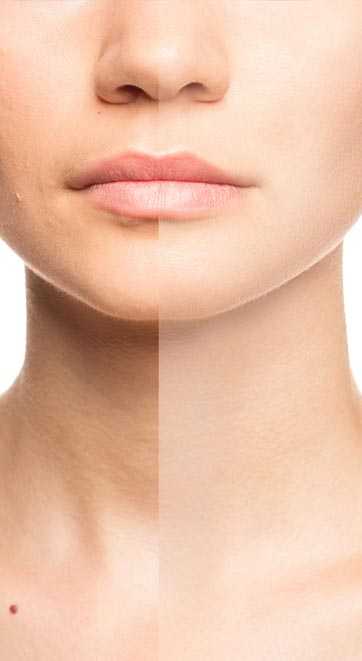
Who can benefit from fibroblast culture?
Cell quality is important in fibroblast culture, and the ideal age range is generally between 30 and 50 years.
Fibroblast culture is a stem-cell-based rejuvenation method. It involves taking a tiny sample of skin from behind the ear and multiplying the fibroblast cells obtained from this tissue in a specialized laboratory.
Fibroblasts are responsible for the production of collagen, elastic fibers and hyaluronic acid in the skin. After the age of 25, the number and activity of fibroblast cells gradually decrease. As collagen, elastin and hyaluronic acid diminish, the skin loses vitality and sagging begins.
With fibroblast culture, these reduced substances can be supported again. A very small, sun-protected skin sample is taken from behind the ear, and a blood sample is also collected. These are sent to a specialized laboratory that performs fibroblast culture.
Within approximately 3 to 6 weeks, the fibroblasts reproduced in the laboratory are ready and belong entirely to the patient. Production may continue even after the first treatment, making it possible to plan further applications if needed.
- The method aims to improve skin quality using the patient’s own cells.
- It may support collagen and hyaluronic acid production.
- It can contribute to firmer, more vibrant skin.
- Because the cells belong to the patient, the treatment is personalized.
- Additional sessions can be planned according to need.
Is the result permanent?
Fibroblast culture does not stop the aging process permanently, but it aims to improve skin quality and support rejuvenation with long-lasting benefits.
What happens after treatment?
- Mild redness or sensitivity may occur at the application site.
- Patients can usually return to daily life quickly.
- The improvement becomes more apparent gradually over time as cellular activity increases.