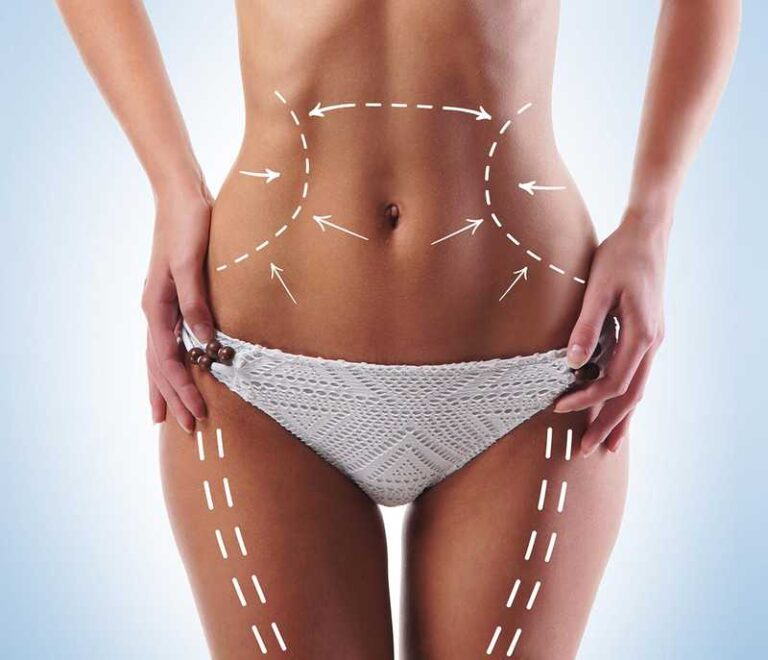
Who can undergo liposuction?
Liposhaping provides the best results for patients of normal or slightly above-normal weight who cannot eliminate localized fat deposits despite exercise and diet.
Liposuction is a fat-removal procedure in which resistant localized fat tissue is removed to achieve regional slimming. The procedure may be performed on areas such as the abdomen, belly, back, waistline, hips, buttocks, legs, back of the legs, outer thighs, upper legs, chest and cellulite-prone regions under general anaesthesia. Incisions are made at suitable points depending on the target area. The liposuction cannula is advanced through these incisions and fat is removed by vacuum aspiration. In this way, direct regional contouring is achieved. The incisions are then closed to complete the operation.
Fat distribution varies according to body structure, sex and ethnicity. In women, fat accumulation is often seen in the hips, waistline, lower and upper abdomen, legs and neck. In men, it may occur around the abdomen and waist, breasts and neck. One typical pattern in men is intra-abdominal fat accumulation. Liposhaping is generally performed in young and middle-aged patients with good skin elasticity. It may be especially successful in individuals with a well-proportioned body, elastic skin and regular exercise habits.
Liposuction may be combined with other body-slimming and cellulite treatments such as mesotherapy, PRP, passive gymnastics and lymphatic drainage.
Is liposuction a permanent solution?
Answering this question with a simple yes or no may be misleading. Liposuction removes fat tissue from the treated area, and the removed fat cells are not replaced with newly produced fat cells. However, this does not mean the result will last for life under all circumstances. Remaining fat cells can still increase in volume with weight gain. Therefore, localized fat accumulation may recur in a previously treated region. For this reason, the long-term persistence of liposuction results is also related to the patient’s nutrition and lifestyle. If the patient does not make dietary changes or incorporate exercise after treatment, regional fat problems may reappear.
What happens after liposuction?
- Absorbable sutures are used and disappear on their own after about one week.
- No dressing is usually required; the area is cleaned only with lukewarm water.
- Care should be taken to keep the treated area dry.
- Showering is possible after 3 days, with attention to taking the shower while standing.
- Sexual intercourse, swimming in the sea and pool use are restricted for 1 month after the operation.
- No noticeable scar remains at the end of the procedure.
How many litres of fat can be removed with liposuction?
The goal of liposuction is not to make the patient lose weight, so removing very large volumes of fat is not the aim. In an average liposhaping procedure, approximately 2 to 4 litres of fat are removed. This amount only rarely exceeds 5 litres. The highest amount that can be removed without putting the patient at undue risk is generally around 10% of body weight. For example, for a 70-kilogram patient, this corresponds to approximately 7 litres.